Inquiries to Estrella Ltd.
042-649-5970
042-649-5970

[Cambodia]
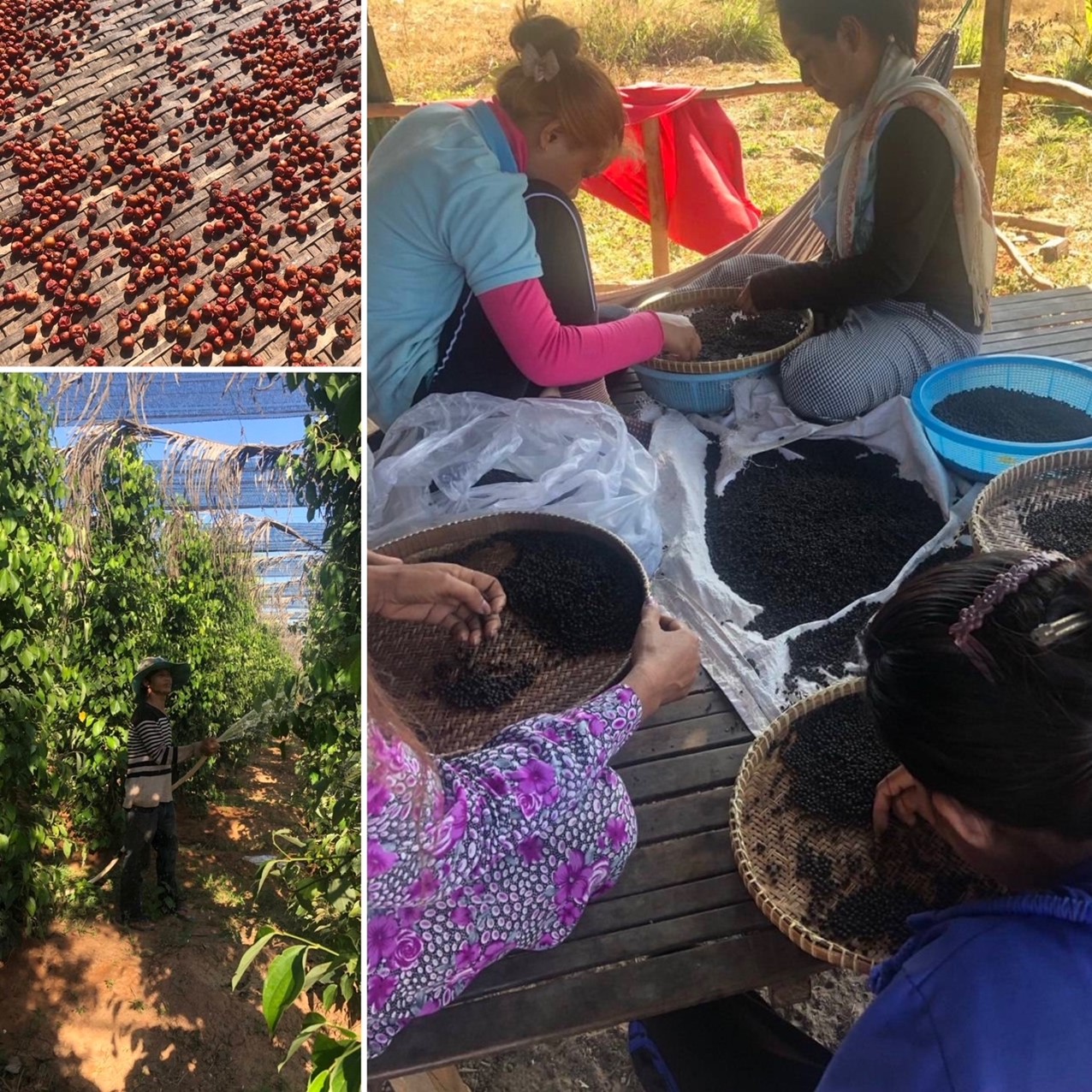
Have you ever wondered about the country of origin of pepper, which is often seen in Japan?
Cambodian pepper is of high quality, highlighting the characteristics of each production area, and is in high demand in the world market.
Our company has been involved in many international cooperation projects in Cambodia, including technical cooperation projects and grant aid. By interacting with the local people and learning about the current situation in which, despite having rich resources, they have not been able to effectively introduce them to the world, our employees and colleagues who have been involved in the business have decided to help the farmers. Agricultural products covered by this include pepper and cashew nuts.
This time, I would like to introduce our pepper business. This pepper is Kampot pepper, which is famous for its rich aroma, and is organically grown with care by local farmers. In 2011, with the desire to spread Cambodian pepper to Japan, we started working hard together with the local people, and the highly recommended salted pepper was born! Our products include salted fresh pepper and paste, and various dried peppers . Why not enjoy the taste of Kampot pepper grown with love by Cambodian farmers.
[Bolivia]
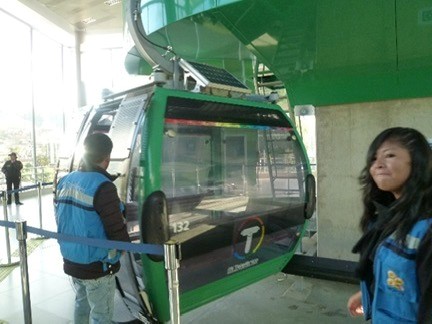
I have visited Bolivia, the navel of South America, for the first time in 20 years and was deeply impressed.
La Paz, the sky city located at an altitude of 3,800 meters, is equipped with a ropeway transportation infrastructure. Its name is “Mi Teleférico,'' which means “my ropeway” in Spanish.
The first line, the Red Line, opened in May 2014. The infrastructure was built by a construction company with headquarters in Austria and Switzerland, at the total construction cost of approximately 23.8 billion yen.
Since then, construction has progressed smoothly, and as of March 2019, 10 lines with a total length of 30.2 km have been completed.
The routes on this ropeway network are differentiated by the color of the gondola: red, yellow, green, and blue, making it easy for us foreigners to understand and ride. The fare is inexpensive at 3 bolivianos (approximately 50 yen) per route, making it a very convenient means of transportation for La Paz residents. The green gondola in the photo runs from the Calacoto district, where the wealthy people of La Paz live, to an area called Libertador .
Also, the view of La Paz city from El Alto, which is 4000 meters above sea level, is a spectacular view. During the day, you can enjoy the snow-capped Mount Illimani, the symbol of Bolivia, at an altitude of 6,439 meters above sea level, and at night, you can enjoy the fantastic orange grow of the night view.
Why not try riding it when you go to La Paz? The recommended course is to climb up to El Alto in the evening, enjoy the sunset while tasting Bolivian KFC "Pojo Copacabana" in El Alto, and descend after dark while enjoying the night view.
[Nicaragua]
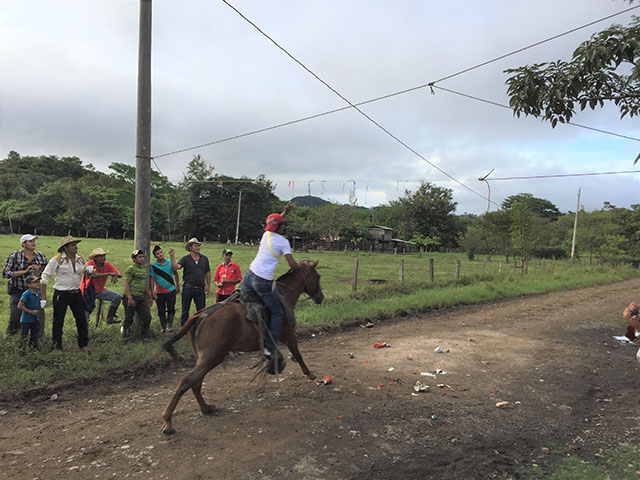
There are many ways to propose marriage around the world. In the area where horse fattening is popular in Nicaragua,
There is a festival in which a young man riding a galloping horse shoots a ring hanging from a string with a stick, in order to propose marriage to a good-looking unmarried woman selected from the village.
As a result of the technical cooperation project, residents' independent activities flourished in areas where participatory primary health care was developed, land was secured and developed, and the long-awaited health center was opened. This matching couple event was held as the main event of the opening celebration.
Attractive women selected from surrounding villages were called to the front of the health center. Everyone is dressed in dashing equestrian fashion. Similarly, a group of unmarried men showed up with their beloved horses. The man who successfully won the ring could give it to the woman of his choice and propose marriage to her. On this day, there were 5 men and 3 women. The man's reins will determine the future.
[Tokyo, Japan]
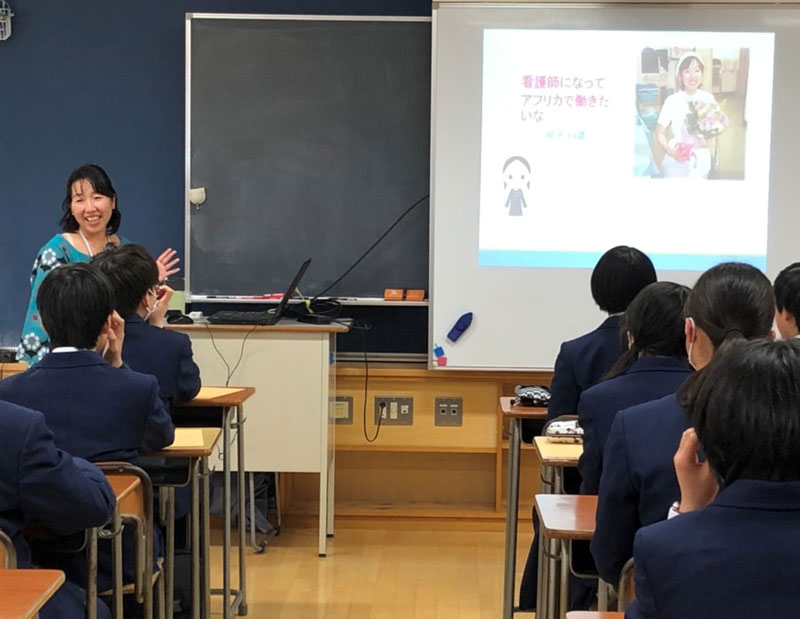
I was asked to teach a class called ``Rewarding Work'' for first-year junior high school students, and I had the opportunity to teach them about ``the joy of international cooperation,'' which is a rewarding job for me.
On that day, I talked about how when I was in junior high school, I watched a documentary program about people working in developing countries, which made me decide that I wanted to become a nurse and work in Africa in the future. About youth peer education activities and the hardships, ingenuity, and joys of life that I experienced in Gabon, Central Africa. I also introduced the dreams and life plans of junior and senior high school in Gabon.
Although there are many things that don't go well when working in a developing country, there is invaluable fun in the process of overcoming difficulties one by one together with the local people, and this is what makes my job so rewarding. In this lecture, the junior high school students listened most intently to the following: ``When I started working at a hospital as a new nurse, I was unable to work so well that all I said every day was “I’m sorry, excuse me'' and sometimes I was assigned to a different department than I hoped for, and I couldn’t do all the work I wanted. Even so, if you find something that makes you think, ``Oh, this is fun,'' and work hard at it, one day your efforts will surely come in handy in some unexpected way, so please find it “I think it was the part I added at the end of the lecture.
Later, I received a written review of the lecture. “I respect you for being able to do the job you wanted to do when you were in junior high school student just like us.” “I could face my future by thinking about “my dreams”, which Gabonese junior high school students do”, so on that helped you a little. I am grateful for this valuable opportunity I was given. And I am very much looking forward to the future of the junior high school students.
[Central Africa/Gabon Republic]

Gabonese people have fine curly hair. Men often keep their hair cropped or skinned, while women add length with extensions and have it braided, which is a fashionable standard.
Braiding can be done at high-end beauty salons with nice interiors, as well as self-proclaimed beauty salons where there are no ceilings or walls in sight. It takes about 3 hours to finish anywhere, and in some cases, it can take up to half a day. The price is around 2,000 yen. Considering that a set meal in Gabon costs around 300 yen, you can see that they spend a lot of time and money on being fashionable. This braided hair will last up to 3 weeks, but you can't shampoo it during that time! When Japanese people try it, it is a common pattern for them to give up after 3 to 5 days due to itching.
In addition to extensions, wigs are another option for women to dress up.
When I first came to my new position at work, it was hard time for me to recognize my colleagues every Monday because they changed the hairstyles every week. The photo is of a beautiful employee at a beauty salon that I always go to (not an open-air store with a roof, but a self-proclaimed beauty salon). Check out her lovely hairstyle.
[Nicaragua Chontales Province]
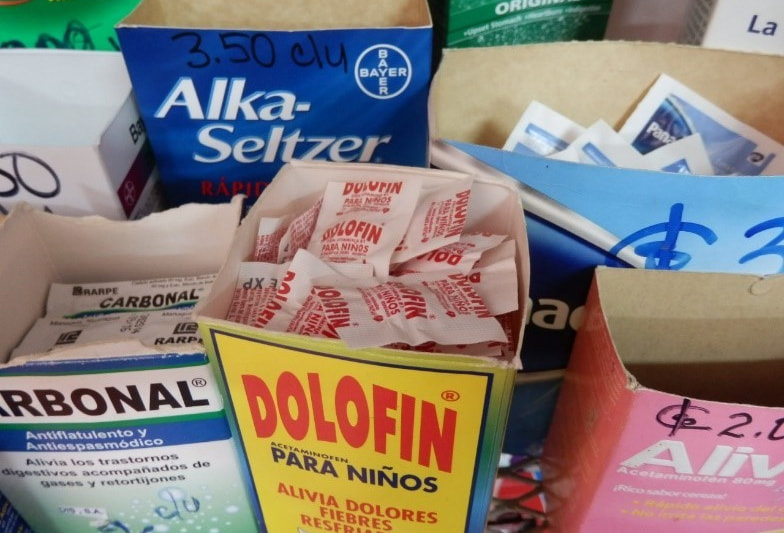
``Selling over-the-counter medicines in bulk'' is a common sales method in pharmacies in developing countries. There are no small boxes, and you can purchase 1 tablet (1 capsule). (When you go to a medical institution, you will be prescribed the same amount of medicine as in Japan, based upon your doctor’s prescription)
Pharmacies (which often double as general stores) in the mountainous regions of Central and South America sell cough syrup and powdered milk in small portions. In addition to medicines, it is also common to sell items such as gauze bandages, disposable diapers, contraceptives, and sanitary products, and others in bulk.
This is a very reasonable sales method for consumers, but if you have to locally procure bulk medicines, it is important to gather information on your own as there are none of instructions manuals and the date of manufacture.
[Kampong Cham Province, Cambodia]
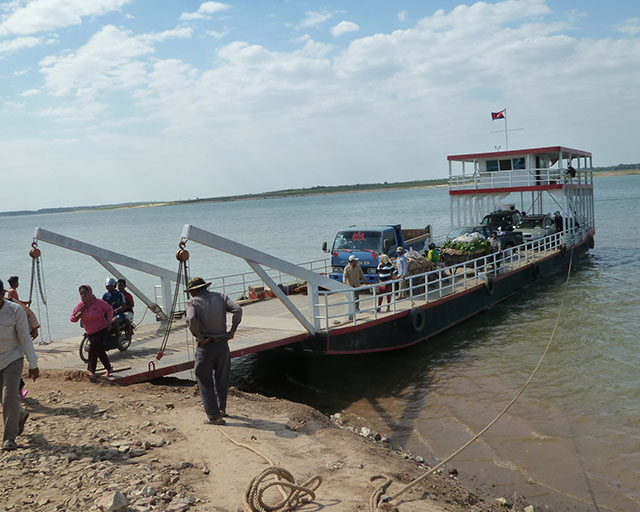
Kampong Cham is a province located northeast of Phnom Penh, the capital of Cambodia. It is a relatively large province in Cambodia, with the fifth largest population in the country (approximately 1.08 million people). The Mekong River flows east of the province's capital city of Kampong Cham, and this majestic Mekong River divides into many tributaries, dividing the surrounding villages.
Ferry boats like the one in the photo are used to get from one divided village to towns or from town to village. This ferry boat may look old, but when I got on board, I found it to be very sturdy and stable.
That's no wonder, as this ship has the capacity to carry six 2-ton trucks. What I would like to praise above all else is the outstanding skill with which this ship is maneuvered. The maneuvering technique that allows the ship to land on such an uneven shore without any vibration or shock is impressive. If you listen to music while on board, you'll find yourself wondering, "When did we arrive on shore?"
The ferryboat is equipped with toilets, but there is no bowl or anything, just a round hole, so the excrement is just dumped into the river and disposed of by the fish. When you go to Kampong Cham, be sure to take a ride on a ferry boat on the Mekong River at least once.